Floral Number Eight
A Craft Fair Designer’s First Look at Floral Number Eight
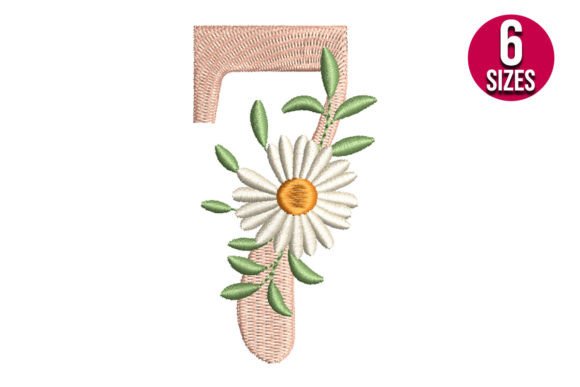
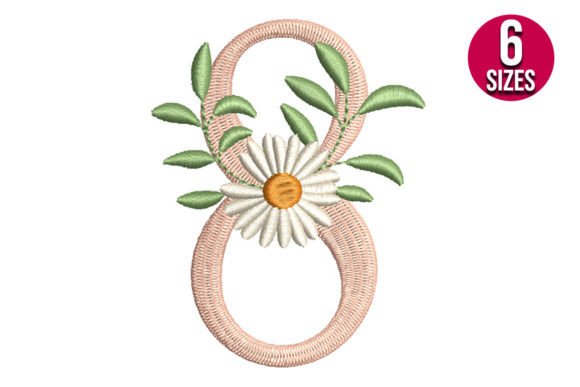
As an embroidery designer who’s packed, stitched, and sold at over 70 craft fairs and handmade markets, I approach every new design with two questions: Will it stop someone mid-aisle? and Can I produce it consistently without sacrificing quality? When I first saw Floral Number Eight, my instinct was immediate—it feels elegant yet approachable, with a soft botanical rhythm that leans into modern wedding monogram energy without shouting “bride.” It’s not rustic, not minimalist, not cartoonish—instead, it lands in that sweet spot of premium handmade: delicate florals wrapping a clean, confident number eight. That duality makes it unusually versatile for small shop products.
Where Floral Number Eight Shines on Craft Fair Goods
At the booth, visual hierarchy is everything. Customers scan in under three seconds—so Floral Number Eight needs to read clearly at arm’s length. Here’s where it delivers:
- Tote bag design: Centered on a natural canvas or oat linen tote, it reads as both personal and polished—ideal for bridesmaids’ gifts or “8th anniversary” market bags.
- Apron embroidery: Positioned just above the pocket, the floral curves echo the shape of the apron bib. It adds charm without overwhelming the garment’s utility.
- Tea towel embroidery: On tightly woven cotton or linen tea towels, the design holds crispness—even with moderate stitch density. The number anchors the composition; the florals soften it beautifully.
- Embroidered patch: Sized down to 3–4 inches, Floral Number Eight retains legibility and charm. Perfect for iron-on or sew-on patches on denim jackets, backpacks, or kids’ caps.
- Pillow cover & fabric pouch: As a focal point on a neutral linen pillow or drawstring pouch, it elevates perceived value instantly—no extra embellishment needed.
It’s less effective on curved surfaces like structured baseball caps unless resized and re-digitized for crown placement—and even then, test carefully. On textured terry cloth towels or thick twill, clarity suffers unless stabilizer and thread contrast are dialed in.
What Makes This Wedding Monogram Work for Real-World Sales
Unlike many monogram designs that feel stiff or overly formal, Floral Number Eight invites interpretation: it could represent an anniversary year, a birth month, a lucky number, or even a boutique’s founding date (think “Est. 2008”). That flexibility expands its audience beyond bridal buyers to Etsy sellers curating themed collections—“Vintage Numerals,” “Botanical Home Goods,” or “Modern Monogram Kits.”
For digital embroidery file buyers, it’s a strong anchor design—especially when bundled with coordinating florals or alternate numbers. Its balance of detail and openness means it photographs well across lighting conditions, which matters for printable mockups and Etsy listings. And yes—it scales cleanly both up (for large market bags) and down (for tiny pouches), as long as you respect minimum size thresholds.
Practical Production Notes Every Embroidery Business Owner Should Know
Before stitching your first batch, treat Floral Number Eight like a new collaborator—not just a machine embroidery design. Here’s what I do:
- Test on scrap fabric that matches your intended product—especially if using dark fabric or high-thread-count linens. Some floral elements may blur if stitch density is too tight.
- Check thread colors against your base fabric in natural light. Soft pastel threads pop on charcoal; deep burgundy or sage can disappear on olive linen.
- Review spacing and flow—does the number eight dominate, or do the florals compete? A well-balanced version should feel unified, not cluttered.
- Confirm hoop size and stabilizer needs. Dense fill areas near the number’s loops may require medium-cutaway stabilizer on lightweight cottons. Skip tear-away on textured tea towels—it won’t release cleanly.
- Create at least one real mockup before listing. A finished embroidered tote bag tells customers more than ten product photos ever could.
- Compare fabric colors side-by-side. What reads as “soft blush” on screen may look muddy on unbleached canvas—always verify physically.
- Confirm commercial licensing before selling finished products. Since this is marketed as a machine embroidery design for personalized items, assume it permits commercial embroidery—but double-check terms before launching wholesale or subscription bundles.
Why Floral Number Eight Strengthens Your Booth & Brand
In a sea of generic florals and overused script fonts, Floral Number Eight stands out by being intentionally specific yet emotionally open. It signals craftsmanship—not just decoration. Customers notice the care in petal layering, the rhythm between stem and curve, the way the number eight flows rather than sits. That perceived handmade quality lifts price points naturally: a $28 embroidered tea towel feels justified when Floral Number Eight is the centerpiece.
For Etsy sellers and small shop owners, it supports brand consistency across categories—same design, different applications. Use it on a pillow cover, then echo it in a matching market bag tag or gift box sticker. That repetition builds recognition without monotony.
Most importantly? It sparks conversation. At last month’s fair, a customer paused at my apron display, pointed to Floral Number Eight, and said, “That’s my daughter’s graduation year—can you do it in navy?” Yes. And she bought three.
Closing Thought: A Design That Sells Because It Feels Human
Floral Number Eight isn’t flashy—but it’s memorable. It doesn’t rely on trend-chasing or gimmicks. Instead, it trusts the quiet power of thoughtful composition, balanced stitch density, and floral warmth rooted in real embroidery craft. For craft fair sellers, handmade market vendors, and digital embroidery file creators alike, it’s a reliable, repeatable, revenue-ready asset—provided you honor its nuances in production. Stitch it right, display it thoughtfully, and let the number—and the flowers—do the rest.