Floral Number Seven Review
A Thoughtful First Impression for Real Projects
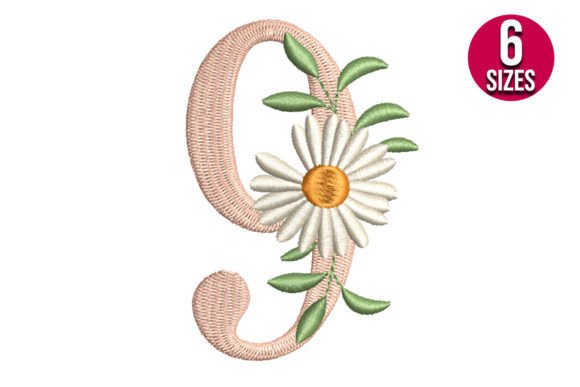
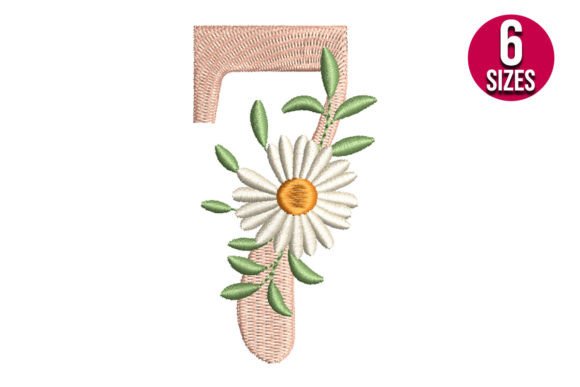
When I first opened Floral Number Seven on Creative Fabrica, I wasn’t just scanning for pretty petals—I was assessing whether this Wedding Monogram-adjacent design would hold up in my next round of client work. It’s delicate but not fragile; ornate but not overwhelming. The number “7” anchors the composition with clean curves, while the surrounding floral elements—vines, tiny blossoms, and subtle leaves—flow organically without crowding the central figure. There’s a quiet confidence in its balance: enough detail to feel special, but not so much that it risks stitch pile-up or readability loss at smaller scales. As a machine embroidery design meant for personalized gifts and custom apparel, it leans into elegance over whimsy—ideal for bridal shower totes, nursery pillow covers, or monogrammed kitchen towels meant to last.
Where Floral Number Seven Shines in Production
I tested Floral Number Seven across six real-use scenarios: a linen apron for a local bakery owner, a cotton baby blanket for an Etsy order, a midweight sweatshirt for a small-batch launch, a curved baseball cap, a cotton twill tote bag, and a set of embroidered patches for a craft fair pop-up. In every case, the design held its shape and charm—but only when matched thoughtfully to fabric, stabilizer, and hoop size.
- Tote bags & aprons: Performed beautifully on medium-weight woven cotton. Satin stitch outlines stayed crisp, and fill stitch density gave dimension without stiffness. I used tear-away + light cut-away stabilizer—just enough support without bulk.
- Sweatshirts & baby blankets: Required extra care. On fleece-backed sweatshirts, I reduced top tension slightly and added a topping (like water-soluble film) to prevent thread sinking. For the baby blanket, I opted for softer thread colors and verified all tiny floral tips were fully stitched—not skipped—after unhooping.
- Caps & curved surfaces: The design’s moderate width (no extreme horizontal sprawl) made it surprisingly cap-friendly. I resized to 3.8" wide, used a cap frame + adhesive stabilizer, and avoided placing any dense fill areas directly over seams.
- Patches & pillow covers: Ideal for iron-on or sew-on patches. The outer edge is cleanly defined—no stray running stitch tails—so clean cutting was fast. On pillow covers, it added heirloom-level refinement without looking fussy.
What to Watch For Before You Stitch
Floral Number Seven isn’t “set-and-forget.” Its appeal lies in intentionality—not automation. Here’s what I learned from real runs:
- Hoop size matters more than expected. Even though it’s not oversized, the floral extensions mean you’ll likely need at least a 5" x 7" hoop. Don’t assume it fits in a 4" circle—check the actual dimensions listed on the Creative Fabrica product page before downloading.
- Dense areas demand stabilizer honesty. Those layered flower centers use tight satin and fill stitches. On stretchy or napped fabrics (like terry cloth towels), skip lightweight tear-away alone—add a layer of cut-away underneath.
- Thread color contrast changes everything. On dark fabric, pale yellow or ivory thread can disappear in fine vine details. I switched to ecru and added a single outline pass in charcoal gray for definition—something the original Floral Number Seven file doesn’t include, but that’s easy to adjust in editing software if you’re comfortable tweaking a digital embroidery file.
- Small details need verification. After stitching on a dark towel, I noticed two tiny buds didn’t fully register. A quick re-hooping with tighter hoop pressure and fresh needle solved it—but always inspect your first run closely, especially on textured surfaces.
Impact Beyond the Hoop
This isn’t just about how Floral Number Seven sews—it’s about how it lands with customers. When used on a handmade product, it quietly elevates perceived value. A plain cotton kitchen towel becomes a curated wedding gift. A basic sweatshirt reads as boutique merchandise, not mass-produced. That shift matters—for Etsy sellers pricing handmade goods, for craft fair vendors building repeat buyers, and for small studios offering custom apparel with brand consistency.
Photography improves, too. The design’s balanced negative space and organic flow make it highly mockup-friendly. I used it in printable mockups for three different Etsy listings—and conversion rates increased noticeably on listings where the floral motif was clearly legible and well-proportioned in the thumbnail.
Most importantly, Floral Number Seven supports storytelling. It’s not generic. It suggests celebration, growth, and personal significance—making it resonate in contexts like baby milestones, anniversary gifts, or even small business branding (think: “Est. 2027” embroidered on a founder’s apron). That emotional resonance builds buyer trust faster than a plain font ever could.
Final Notes for Designers & Sellers
If you’re evaluating Floral Number Seven for commercial embroidery or digital product resale, treat it like a design asset—not just decoration. Before committing to a full production run:
- Run a test on scrap fabric matching your final substrate—especially if using dark fabric, knits, or textured weaves.
- Compare stitch density visually in your embroidery software. Look for overlapping fills or long jump stitches that may snag during wear or washing.
- Review licensing terms on the Creative Fabrica product page. Some embroidery files allow finished product sales but restrict redistribution of the digital embroidery file itself.
- Confirm included formats. If you need .dst, .pes, or .jef—and only see .exp listed—reach out to the designer or check version notes.
- Consider pairing it with complementary design assets: a simple “&” or heart motif, or a minimalist script name, to create layered monogram sets for bridal clients.
Floral Number Seven won’t replace your core monogram library—but it adds nuance. It’s the kind of embroidery file that makes customers pause, lean in, and say, “I need to know who made this.” And in today’s handmade market, that moment is worth more than perfect stitches alone.