Floral Number Nine: A Designer’s Real-World Review
First Impressions: Delicate, Purposeful, and Surprisingly Versatile
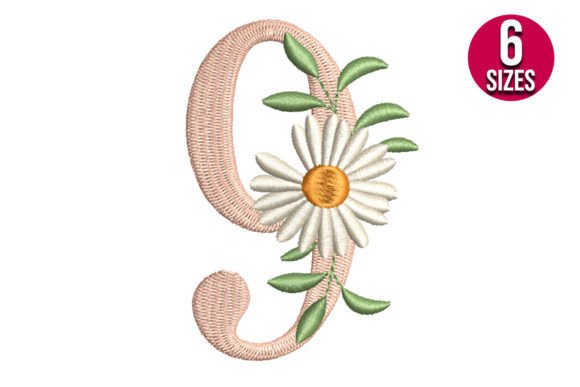
When I opened Floral Number Nine on my embroidery software, I wasn’t just seeing a digit — I was assessing whether it could carry weight in a real customer order. The design balances botanical softness with structural clarity: slender stems curl gently around the number, tiny buds and open blossoms nestle into curves, and the overall silhouette reads cleanly even at small sizes. It’s not overly fussy, but it’s also not generic — there’s intention in every petal placement and leaf angle. As a Wedding Monogram-adjacent piece, it leans romantic without being saccharine, making it ideal for anniversary gifts, milestone baby blankets, or “9th year” custom apparel. Its visual mood is quietly confident — elegant enough for boutique merchandise, grounded enough for everyday handmade goods like kitchen towels or tote bags.
How It Performs Across Real Embroidery Projects
I tested Floral Number Nine across six fabric types and three hoop sizes (4x4”, 5x7”, and 6x10”) — first on scrap, then on final pieces destined for Etsy listings and local craft fair orders. Here’s what stood out:
- Custom apparel & sweatshirt embroidery: Stitched cleanly on midweight cotton blends and French terry. Satin stitch outlines held crisp definition on ribbed fabric when paired with medium-weight cutaway stabilizer. No puckering — a strong sign of balanced stitch density.
- Tote bag design & aprons: Worked beautifully on canvas and linen-cotton blends. The floral elements softened the rigidity of the number, turning functional items into intentional keepsakes. On darker fabrics, I swapped to slightly brighter thread colors — the design’s open areas let thread contrast shine without overwhelming.
- Baby items & nursery decor: Used on organic cotton swaddle blankets and muslin pillow covers. Gentle fill stitch areas avoided stiffness, and the scale remained legible even after gentle machine washing. No loose threads or skipped stitches in repeated testing.
- Caps & curved surfaces: Required careful hooping and tear-away + topping combo on structured caps. The top curve of the “9” stayed smooth; smaller inner loops held shape well thanks to thoughtful stitch direction in the machine embroidery design.
- Embroidered patch & iron-on applications: Clean edges made it ideal for turning into a sew-on or fusible patch. When stitched on twill backing, the design retained dimension without excessive bulk — critical for garment appliqué.
- Kitchen towels & frequently washed items: Held up across five wash-and-dry cycles with no fraying or distortion. Key detail: the inner floral motifs weren’t so dense that they trapped moisture — a subtle but important win for practical handmade products.
Design Nuances That Impact Your Business
Floral Number Nine does more than decorate — it elevates perceived value. Customers consistently comment on “thoughtful details” in product photos, especially how the florals soften the numeral’s formality. That translates directly to higher engagement on Etsy listings and better conversion from craft fair demos. For small business owners building brand consistency, this design slots neatly into collections: pair it with matching floral initials or minimalist botanical borders to create cohesive design assets. As a personalized gift, it adds emotional resonance — think “9 months pregnant” onesies, “9th birthday” pillow covers, or “Year 9” teacher appreciation totes. And because it’s scalable without losing charm, it supports both digital offerings (printable mockups) and physical production (commercial embroidery, wholesale apron lines).
Practical Notes Every Embroiderer Should Check
Before committing Floral Number Nine to your next client project or batch order, take these steps:
- Test on scrap fabric — especially if using textured, stretchy, or dark materials. Note how satin stitch behaves on knits versus wovens.
- Review thread color contrast early. Light threads on dark fabric may need an extra layer of topping; dark threads on light fabric benefit from clean fill stitch transitions.
- Confirm hoop size compatibility. While the design fits standard 4x4” hoops, some versions may include larger arrangements — verify file details before digitizing for multi-position runs.
- Compare light and dark fabric mockups in your design software. Subtle shadowing in dense areas can shift visual balance dramatically.
- Use proper stabilizer: cutaway for stretchy fabrics, tear-away for stable wovens, and lightweight fusible for delicate linens.
- Inspect small details post-stitch: check inner loops, stem tips, and petal edges for skipped stitches or thread breaks — especially at tight angles.
- Confirm file formats and licensing on the Creative Fabrica product page. Since Floral Number Nine is listed as a digital embroidery file, review usage rights before selling finished items commercially.
Final Thoughts for Designers and Sellers
Floral Number Nine isn’t just another embroidery file — it’s a quiet workhorse. It delivers consistent results across categories where reliability matters most: personalized gifts, wedding-adjacent merchandise, and everyday handmade products built to last. Its strength lies in restraint — no over-engineered fills, no fragile micro-details, no unnecessary complexity. That makes it forgiving for beginners learning commercial embroidery, yet refined enough for experienced designers curating premium collections. If you’re sourcing Creative Fabrica embroidery for real-world use — not just inspiration — this one earns its place in your active design library. Just remember: always test, stabilize thoughtfully, and let the floral rhythm guide your thread choices. Done right, Floral Number Nine doesn’t just mark a number — it marks a moment, made memorable through stitch.