Cute Floral Cat: A Designer’s Real-World Embroidery Review
First Impressions: Charm Without Clutter
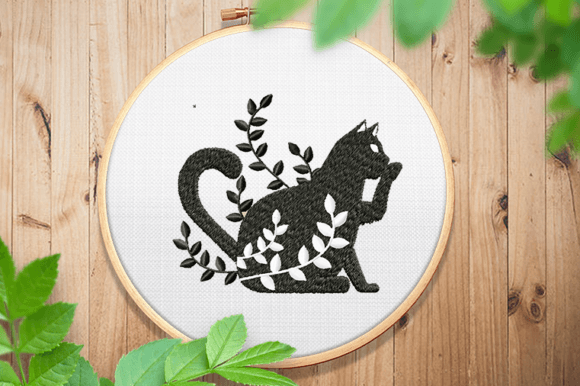
When I opened Cute Floral Cat, what struck me wasn’t just the subject—it was the restraint. A black cat silhouette wrapped in a soft, organic floral blanket, rendered in only black and white thread. No gradients, no busy outlines, no filler motifs. Just shape, contrast, and quiet personality. It feels intentional—not cute for the sake of cuteness, but thoughtful, balanced, and quietly expressive. That matters when you’re choosing a machine embroidery design for real products, not just digital previews.
Where It Lives Best: From Tote Bag to Nursery Shelf
I tested Cute Floral Cat on a natural canvas tote bag first—medium-weight, slightly textured, stabilized with tear-away. The result? Clean satin stitch edges on the cat’s outline, gentle fill stitch within the floral blanket, and crisp negative space between elements. It read beautifully at 3.5 inches wide—large enough to catch the eye, small enough to sit neatly on a pocket or sleeve.
It also translated well onto a lightweight cotton baby onesie (with light cut-away stabilizer), where its simplicity avoided bulk and kept stitching soft against delicate skin. On a structured twill cap? Tricky—but doable at 2.75 inches with careful hooping and a medium-density stabilizer. The design’s open layout avoids dense corners, so it doesn’t pucker or distort on curved surfaces like hats or pillow covers.
For Etsy sellers and small shop owners: this is a strong candidate for holiday embroidery—think tea towels for spring gifting, linen aprons for boutique kitchen brands, or minimalist nursery pillows. Its two-tone palette makes mockups fast and consistent across listings. As a personalized gift, it reads as handmade *and* polished—not overly crafty, not sterile. Customers notice that difference.
Where to Pause—and Why
Cute Floral Cat isn’t built for every surface. On thin jersey or stretchy fabric? Proceed with caution. The clean lines rely on stability; without proper stabilizer and tension control, the floral blanket can blur or “swim.” On dark fabric, black thread works cleanly—but if you’re using white thread over black, test contrast first. Some whites dull on deep charcoal or navy, losing definition in the floral details.
Avoid cramming it into tiny hoops under 3 inches unless you’ve verified how fine details hold up. The floral blanket’s tendrils are delicate—not micro-stitched, but designed with breathing room. If your project demands extreme miniaturization (like a keychain patch), check whether those curves stay legible after stitching.
Also: while it fits jackets and bags, avoid layering it directly over seams, zippers, or heavily quilted sections. The design assumes a relatively flat, stable base. On textured fabrics like bouclé or heavy corduroy, consider simplifying the floral blanket in your editing software—or opt for an applique design instead.
What It Does for Your Craft Business
This isn’t just another cat embroidery file. Cute Floral Cat elevates perceived value because it balances charm with craftsmanship. Customers browsing your Etsy shop or local craft fair booth don’t see “just a cat”—they see intention. That translates to higher willingness to pay, better repeat engagement, and stronger brand consistency if you use it across product lines (e.g., matching tote + tea towel + baby bib).
As a digital embroidery file, it’s versatile but not generic. Its two-color limit means fewer thread changes, faster runs, and reliable color matching—even across different machines or batch orders. For commercial embroidery shops, that’s time saved and fewer re-dos. For hobbyists and makers, it’s forgiving without feeling basic.
Practical Designer Notes Before You Stitch
- Always test on scrap fabric—especially if switching from cotton to denim or knit.
- Check stitch density in the floral blanket area. If it feels too heavy for your fabric, reduce density slightly before final run.
- Confirm hoop size compatibility. While it scales well, very tight hoops may crop subtle curves—review the outermost points in your embroidery software.
- Inspect small details in both black-on-white and white-on-black mockups. What reads clearly on screen may soften in thread.
- Use appropriate stabilizer: tear-away for stable wovens, cut-away for knits, and lightweight fusible for lightweight linens.
- Verify licensing before selling finished items or bundling Cute Floral Cat into digital product packs. This is essential for Etsy sellers and digital embroidery file resellers.
- Compare light and dark backgrounds in printable mockups—you’ll spot contrast issues before stitching begins.
Final Thought: It’s Not Just a Cat—It’s a Design Decision
Choosing Cute Floral Cat says something about your standards. It’s not flashy, but it’s memorable. It doesn’t shout—but it invites closer looking. In a market flooded with overworked, hyper-detailed embroidery files, this one stands out by doing less, and doing it well.
Whether you’re embroidering a custom sweatshirt for a local coffee shop, building a cohesive line of handmade baby gifts, or sourcing design assets for a seasonal boutique collection—Cute Floral Cat delivers quiet confidence. It works. It sells. And most importantly, it stitches true.