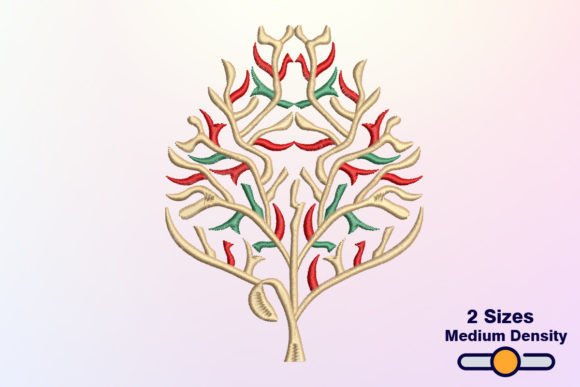
Floral Tree Embroidery Design
First Impression: Soft, Elegant, and Quietly Bold
As an embroidery designer who’s prepped over 200 craft fair booths—and shipped thousands of embroidered tote bags, tea towels, and patches—I opened Floral Tree expecting something gentle. What I found was more intentional than cute: a balanced composition with organic flow, subtle layering, and breathing room between elements. It reads as elegant, not fussy; soft, not vague; and quietly bold—the kind of design that draws attention without shouting. That’s gold at a crowded handmade market where shoppers scroll fast and pause only for clarity, charm, or instant emotional resonance.
Where Floral Tree Shines on Craft Fair Products
Tote bags: Perfect as a centered chest placement or lower-corner accent. The tree’s vertical rhythm complements the bag’s structure, and its open negative space prevents visual heaviness—even on dark canvas or linen blends.
Aprons: Ideal above the pocket or along the waistband curve. The floral details read beautifully at 3.5–4 inches tall, and the design avoids dense fill areas that could stiffen the fabric near movement zones.
Tea towel embroidery: A standout. The clean lines and moderate stitch density hold up on textured cotton terry or waffle weave—no bleeding, no puckering—if paired with medium-weight cutaway stabilizer. Customers love how it elevates an everyday kitchen item into a giftable handmade product.
Embroidered patches: Works exceptionally well at 2.75"–3.25". The shape is self-contained, with no fragile tendrils or isolated stems—so it trims cleanly and sews or irons on reliably. Great for branding aprons, denim jackets, or kids’ backpacks.
Pillow covers & small pouches: Scales down gracefully. At 2.25", the trunk remains legible, and the floral clusters retain definition. Avoid going smaller than 2"—tiny buds or fine branch tips may lose clarity on textured fabrics or under booth lighting.
Caps & curved surfaces: Use caution. While the overall shape is compact, the upper foliage extends slightly beyond a tight circle. Test hoop placement on a real cap blank first—some versions may require slight repositioning or optional trimming of outer leaf elements for optimal fit.
What Makes Floral Tree Sell—Beyond Aesthetics
This isn’t just a pretty machine embroidery design—it’s a booth-ready asset. Its Forest category alignment taps into enduring demand for nature-inspired handmade products, especially among Etsy sellers and boutique makers curating seasonal, earthy, or slow-living collections. It feels premium without requiring metallic thread or complex fills—so your production stays efficient and your margins stay healthy.
Visually, Floral Tree strengthens brand consistency across product types. Whether stitched on a linen tea towel or a recycled-cotton tote, it carries the same calm confidence. That cohesion builds trust: customers recognize your style before they even read your shop name.
For photo listings? It photographs cleanly. No glare-prone satin stitches. No muddy gradients. Just crisp contrast, natural spacing, and thread colors that pop against both light and mid-tone fabrics. Pair it with soft natural light and a neutral backdrop, and your printable mockup will convert.
Practical Production Notes Every Embroidery Business Owner Should Know
Before batch-producing Floral Tree for your next craft fair run, do these five things:
- Test on scrap fabric that matches your final product—especially if using textured towels, thick denim, or dark fabric. Thread contrast matters more than you think.
- Review stitch density in the floral clusters. If your file includes dense satin fills or tiny detached elements, confirm they’re optimized for home or commercial embroidery machines—not just digitized for display.
- Confirm hoop size and placement. Some versions of this design may extend just beyond a 4x4 hoop. Check before loading dozens of caps or pouches.
- Match stabilizer to fabric texture. Lightweight tear-away works for smooth cotton totes; medium cutaway is essential for waffle-weave tea towels or structured aprons.
- Create one real mockup—not just a digital preview. See how the finished product feels in hand, how light hits the stitches, and whether the scale reads correctly from 3 feet away (the average booth browsing distance).
Careful-Use Considerations for Handmade Sellers
Avoid Floral Tree on ultra-heavy canvas or highly napped fleece—the delicate branch lines may sink or blur. Skip it for very small items like keychain charms or baby onesies under 2 inches unless you’ve verified clarity at that scale. On dark fabric, choose high-contrast thread colors (ivory, pale sage, or warm taupe instead of beige) to preserve detail. And never assume the design is optimized for every surface: curved cap fronts, quilted pillow covers, or ribbed knit fabric all shift tension and visibility.
Final Verdict: A Reliable, Repeatable Craft Fair Workhorse
Floral Tree isn’t flashy—but it’s dependable. It converts browsers into buyers because it feels both personal and polished, handmade but not amateurish. As a digital embroidery file, it supports speed *and* quality: quick hooping, consistent results, and strong visual return per minute stitched. For Etsy sellers juggling listings and fulfillment, for small shop owners building cohesive collections, and for creative entrepreneurs who value repeatable design assets—this is the kind of embroidery file that earns shelf space, not shelf clutter.
Just remember: always verify commercial licensing before selling finished products, compare thread colors across fabric swatches, and treat every new batch like a test run—until you know exactly how Floral Tree behaves on *your* materials, *your* machine, and *your* customers’ shelves.