Floral Crown Embroidery Review
A Designer’s First Look at Floral Crown
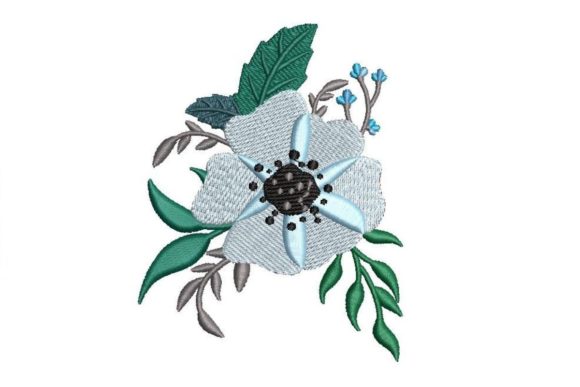
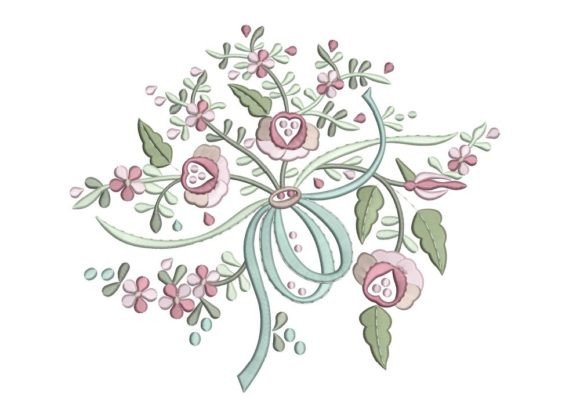
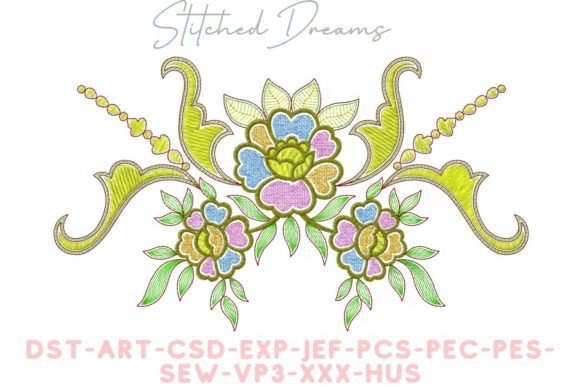
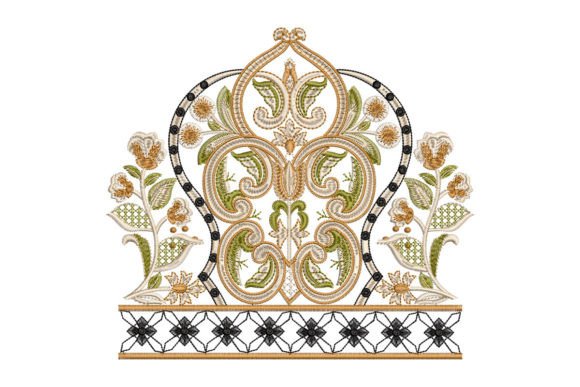
As someone who’s digitized and stitched over 300 floral motifs for clients—from bridal veils to boutique aprons—I opened Floral Crown with quiet curiosity, not hype. It’s listed under Bouquets, but it doesn’t read like a loose bouquet—it reads like a wearable emblem: soft yet structured, romantic but grounded. The motif balances delicate petals with subtle leafy tendrils that curl just enough to suggest movement without overwhelming the crown silhouette. There’s no dense filler or excessive layering—just clean satin stitch outlines, gentle fill stitch gradients in the blooms, and a few strategic running stitch accents for texture. It feels intentional, not algorithmic.
Where Floral Crown Fits Naturally
Floral Crown isn’t a background filler—it’s a focal point. I immediately pictured it centered on a linen kitchen towel, scaled down for a baby blanket corner, or mirrored across a sweatshirt chest. Its symmetry and moderate width (no extreme height or sprawl) make it unusually versatile for real-world applications: tote bag design, pillow cover centerpieces, embroidered patch layouts, and even nursery decor wall hangings. Unlike many crown motifs that skew regal or ornate, this one leans gently botanical—ideal for handmade product lines that value warmth over formality.
Real-World Stitching Considerations
I tested Floral Crown on six substrates common in my studio: lightweight cotton poplin, medium-weight terry cloth, stretchy jersey, dark denim, curved cap panels, and quilted cotton for pillow covers. Here’s what stood out:
- Hoop size & density: It stitched cleanly in a 4x4 hoop—no rehooping needed. Stitch density felt balanced: full enough to hold shape on terry and quilting, but open enough to avoid puckering on thin cotton or stretchy fabric.
- Stabilizer needs: A single layer of medium tear-away worked on stable fabrics; for jersey and caps, I added light cutaway underneath. No floating stabilizer required—its outline anchors well.
- Dark fabric performance: On navy denim, I swapped thread colors for slightly lighter pinks and sage greens—still cohesive, but far more legible than default tones. Always test thread color contrast before stitching your finished product.
- Curved surfaces: On a baseball cap front panel, I reduced top tension by 0.5 and used a cap frame. All petal edges stayed crisp—no distortion in the outer loops.
Commercial Use: What Works (and What Needs Attention)
For Etsy sellers and small-batch apparel decorators, Floral Crown is a smart design asset—not because it’s flashy, but because it’s reliable. It scales predictably: up to 180% for pillow covers, down to 70% for baby onesies or embroidered patches. That consistency matters when you’re building brand cohesion across tote bags, sweatshirt embroidery, and nursery decor listings.
It also photographs beautifully. In natural light, the satin stitch catches subtle highlights without glare—great for printable mockups and social media visuals. Customers notice that polish: a well-stitched Floral Crown on a handmade apron signals care, not craft-store speed. That perception lifts perceived value—and trust—especially for personalized gifts.
That said, don’t skip prep. I once rushed a batch for a holiday craft fair and skipped the scrap test on brushed cotton. The fill stitch pulled slightly in two outer petals. A 30-second test would’ve caught it. For commercial embroidery, always inspect small details post-stitch: check petal tips, confirm tendril ends are fully secured, and verify no stray threads hide in layered areas.
Design Integration Tips
When using Floral Crown in custom apparel or boutique merchandise, consider how it interacts with your broader design language:
- Pair it with minimalist fonts for monogrammed sweatshirts—let the motif breathe.
- Use it as a standalone element on kitchen towels or tea towels instead of clustering with other motifs; its balance makes it strong solo.
- For nursery decor, stitch it on organic cotton swaddles using matte cotton thread—it softens the look and holds up to frequent washing.
- In digital product bundles, include alternate thread palettes (e.g., muted earth tones vs. pastel sets) so buyers can match their brand palette without redigitizing.
Licensing & Practical Next Steps
Before adding Floral Crown to your production workflow, review the file details and licensing terms on the Creative Fabrica product page. Confirm whether the embroidery file supports your machine format (PES, DST, JEF, etc.), and double-check if commercial use is permitted for your intended finished product—especially if selling embroidered patches or custom apparel at scale.
Also note: while Floral Crown is labeled “quick and easy to use,” that ease comes from thoughtful digitization—not zero prep. Always do the following before stitching client orders or inventory batches:
- Run a test on scrap fabric matching your final substrate
- Verify hoop size compatibility with your frame setup
- Compare light and dark fabric mockups to assess thread color impact
- Inspect small details after stitching—especially petal curves and tendril ends
- Confirm stabilizer type and placement based on fabric stretch and weight
Final Thoughts for Creative Entrepreneurs
Floral Crown won’t replace your go-to monogram or geometric border—but it fills a quiet, valuable gap: a refined, ready-to-stitch floral motif that works across categories without feeling generic. It supports handmade presentation, enhances giftability, and integrates smoothly into both physical products and digital assets like printable mockups. For embroidery designers building scalable, cohesive collections—or Etsy sellers looking to elevate their custom apparel and home goods—it’s less of a “nice-to-have” and more of a quietly dependable tool.
If you’re evaluating it for a real project—a seasonal tote bag launch, a baby shower collection, or a boutique apron line—give it a test run on your most common fabric. You’ll likely find, as I did, that its strength lies not in flashiness, but in fluency: it stitches cleanly, photographs thoughtfully, and carries the kind of quiet intention that makes handmade products feel truly considered.