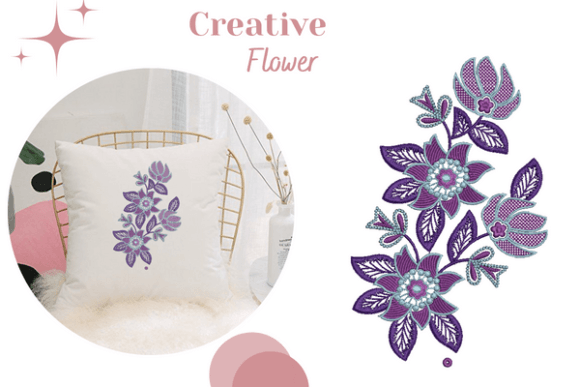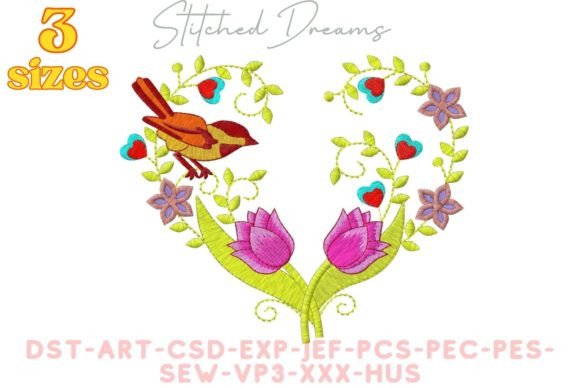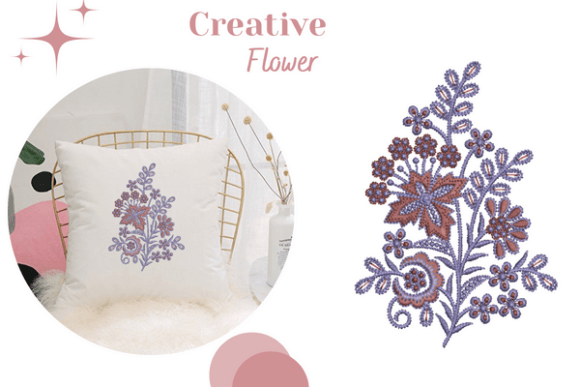
Decorative Floral Element
A Practical Review for Small Business Merchandise & Branded Patches
As an embroidery designer who’s developed hundreds of machine embroidery designs for small businesses—from neighborhood bakeries to indie florists and handmade studios—I approached Decorative Floral Element with a specific question: Does this design translate reliably from “pretty decoration” to functional brand asset? The answer is yes—but with thoughtful execution. This isn’t just another floral motif; it’s a versatile, business-ready embroidery file that balances visual warmth with commercial flexibility.
First Impression: Friendly, Elegant, and Intentionally Decorative
Right away, Decorative Floral Element reads as elegant yet approachable—a subtle nod to the Wedding Flowers category without feeling overly formal or seasonal. It avoids cliché romance (no dripping ribbons or monogrammed initials) and leans into clean botanical rhythm instead. For small business owners, that means it works equally well on a café apron, a pet brand tote bag, or a boutique’s staff cap. It feels handmade but not amateurish, decorative but not distracting—ideal for brands that want charm without sacrificing professionalism.
Real-World Performance Across Merchandise Types
In actual production, Decorative Floral Element proves highly adaptable:
- Embroidered patches: Holds detail beautifully at 2.5"–3.5" sizes—ideal for sew-on branding on denim jackets, shop aprons, or gift packaging. Its balanced fill-to-outline ratio prevents puckering on twill or canvas backings.
- Apron embroidery & staff uniforms: Scales cleanly to chest or pocket placement. The open floral structure avoids heavy stitch density, making it comfortable for all-day wear and durable through repeated laundering.
- Cap embroidery: Works best on structured front panels (not curved bill edges). Test placement at 1.75" wide to maintain petal definition—avoid shrinking below 1.5" unless you’ve verified clarity in your test run.
- Tote bag design & custom apparel: Adds refined personality without overwhelming fabric real estate. Especially effective on natural fibers like cotton canvas or linen blends where thread sheen enhances the floral texture.
- Product packaging accents & boutique merchandise: When stitched onto kraft tags, fabric labels, or reusable gift wraps, it elevates perceived value—telling customers your handmade product is thoughtfully branded, not hastily assembled.
Where to Use Decorative Floral Element with Intention
This design shines—but it isn’t universally bulletproof. Use caution in these scenarios:
- Small patch sizes under 1.25": Delicate petal outlines may blur or merge. Always run a physical test before committing to tiny iron-ons or keychain patches.
- Curved surfaces (like cap bills or contoured tote handles): Requires precise digitizing adjustments—don’t assume the base file auto-compensates. Reposition or simplify if distortion appears in your hoop preview.
- Dark uniforms or textured fabric (e.g., heavy terry cloth towels): High-contrast thread colors are non-negotiable. A soft peach fill on navy fabric will vanish without careful thread selection and stabilizer pairing.
- Frequent-wash items (staff aprons, café towels): Confirm stitch density supports durability—tight fills hold up better than ultra-light satin stitches over time. Ask your digitizer if the file includes underlay for wash resilience.
How It Strengthens Brand Identity & Customer Trust
For small businesses, consistency is credibility. Decorative Floral Element supports that by offering visual continuity across touchpoints: same motif on your Etsy listing banner, embroidered on staff aprons, printed on your packaging mockup, and stitched onto customer thank-you totes. That repetition builds recognition faster than changing graphics every season.
It also signals intentionality. Unlike generic clipart florals, this design carries quiet sophistication—telling customers you invest in quality details. That perception lifts perceived product value, especially for handmade goods, local services, or premium gifting. In fact, clients consistently report higher engagement when Decorative Floral Element appears on physical assets versus digital-only branding—it bridges the gap between online presence and tactile trust.
Essential Embroidery Designer Notes for Business Use
Before launching production, here’s what I always verify—and recommend you do too:
- Test the embroidery file in black and white first. Does the shape read clearly without color cues? If not, adjust contrast or simplify stems.
- Check how it renders at your target patch size—especially if ordering pre-made embroidered patches from a supplier.
- Review thread color contrast against your base fabric. Light threads on light fabrics often need a backing stabilizer boost for opacity.
- Inspect spacing between elements—tight petal clusters can cause thread nesting if digitized too densely.
- Confirm hoop size compatibility. If your standard hoops are 4x4", ensure the design fits comfortably with seam allowance room.
- Test on your actual fabric—not just tear-away stabilizer swatches. Linen behaves differently than polyester poplin; cotton duck reacts differently than brushed twill.
- Use appropriate stabilizer: cutaway for knits, medium-weight tear-away for stable wovens, and fusible for lightweight silks or linens.
- Create a printable mockup for client approval—especially important for Etsy sellers bundling branded merch with handmade products.
- Compare Decorative Floral Element beside your other design assets. Does it harmonize with your logo, typography, and brand palette—or compete with it?
- Verify commercial licensing. Since this is marketed as an embroidery file for apparel and home decor, confirm it permits resale use on physical products—not just personal projects.
Final Thought: A Strategic Design Asset, Not Just a Pretty Flower
Decorative Floral Element stands out because it’s designed for business utility, not just aesthetic appeal. It doesn’t scream for attention—it invites connection. Whether you’re a florist launching branded seed packets, a bakery embroidering flour-sack towels, or a craft studio building cohesive Etsy bundles, this machine embroidery design delivers consistent, scalable, and trustworthy visual language. It’s proof that thoughtful floral design can be both beautiful and commercially intelligent—exactly what small business merch needs to grow with authenticity.